



DPP-1
Dipeptidyl peptidase 1 (DPP-1), also known as cathepsin C, is a lysosomal cysteine protease that activates granule-associated serine proteases by removing inhibitory N-terminal dipeptides[1]. Mechanistically, DPP-1 supports neutrophil elastase, cathepsin G, and proteinase 3 activation, linking the target to neutrophil inflammatory pathways and tissue injury models[2]. In DPPI-deficient mice, reduced neutrophil serine protease activation protected animals from acute experimental arthritis, supporting DPP-1 as a functional inflammation target[2]. Compared with DPP-4, a serine exopeptidase that regulates incretin peptides, DPP-1 functions primarily as cathepsin C in lysosomal immune-protease maturation[3][4]. For experimental applications, prolonged cathepsin C inhibition eliminated neutrophil serine protease activity, and brensocatib reduced bronchiectasis exacerbation risk in phase 2 and phase 3 trials[5][6][7]. - DPP-1 assays can quantify downstream neutrophil elastase, cathepsin G, and proteinase 3 activity[2]. - Cathepsin C inhibitors support bronchiectasis research focused on neutrophil-driven airway inflammation[6][7]. - DPP-1 differs from DPP-4 by targeting immune serine-protease maturation rather than incretin degradation[3][4].
References:
- [1]. Guay D, et al. Therapeutic utility and medicinal chemistry of cathepsin C inhibitors. Curr Top Med Chem. 2010;10(7):708-16. [Content Brief]
- [2]. Adkison AM, et al. Dipeptidyl peptidase I activates neutrophil-derived serine proteases and regulates the development of acute experimental arthritis. J Clin Invest. 2002 Feb;109(3):363-71. [Content Brief]
- [3]. Flatt PR, et al. Dipeptidyl peptidase IV (DPP IV) and related molecules in type 2 diabetes. Front Biosci. 2008 May 1;13:3648-60. [Content Brief]
- [4]. Trzaskalski NA, et al. Dipeptidyl Peptidase-4 at the Interface Between Inflammation and Metabolism. Clin Med Insights Endocrinol Diabetes. 2020 Mar 20;13:1179551420912972. [Content Brief]
- [5]. Guarino C, et al. Prolonged pharmacological inhibition of cathepsin C results in elimination of neutrophil serine proteases. Biochem Pharmacol. 2017 May 1;131:52-67. [Content Brief]
- [6]. Chalmers JD, et al. Phase 2 Trial of the DPP-1 Inhibitor Brensocatib in Bronchiectasis. N Engl J Med. 2020 Nov 26;383(22):2127-2137. [Content Brief]
- [7]. Chalmers JD, et al. Phase 3 Trial of the DPP-1 Inhibitor Brensocatib in Bronchiectasis. N Engl J Med. 2025 Apr 24;392(16):1569-1581. [Content Brief]
All Product Categories
-
DPP-1 Related Products (5)
Related Products (5)

-
Brensocatib
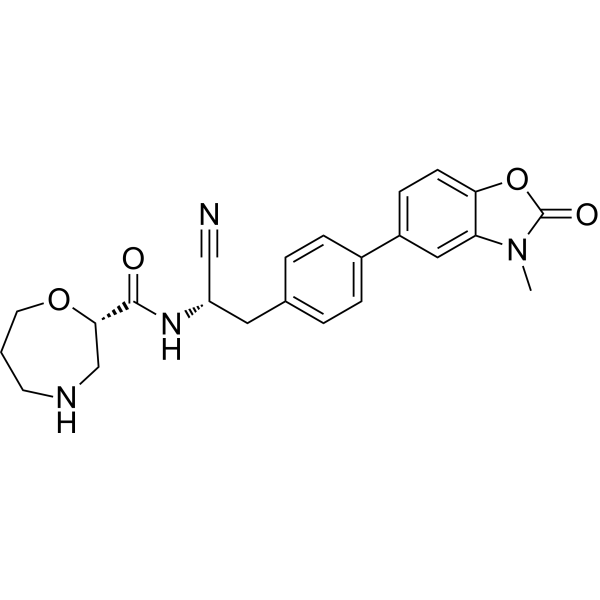 0 ImagesSynonyms: AZD7986; INS 1007Brensocatib (AZD7986) is an oral dipeptidyl peptidase 1 (DPP1) inhibitor with pIC50s of 6.85, 7.6, 7.7, 7.8, and 7.8 in human, mouse, rat, dog and rabbit, respectively.
-
Propyl-GSK-2793660 hydrochloride
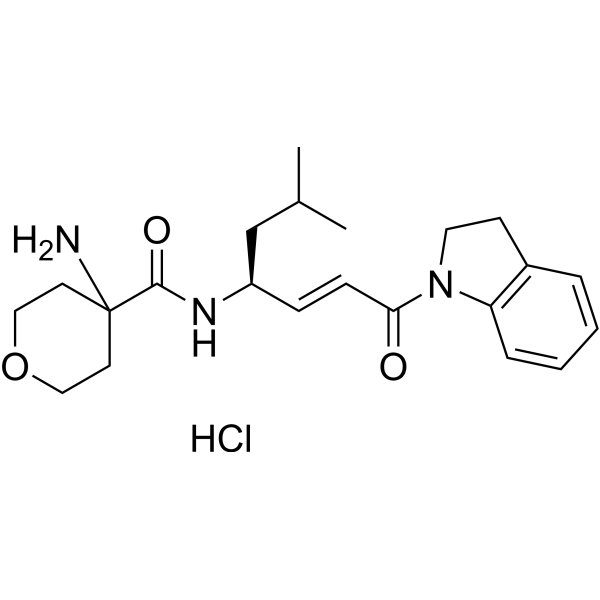 0 ImagesPropyl-GSK-2793660 hydrochloride (compound 1) is a irreversible and covalent DPP1 inhibitor. Propyl-GSK-2793660 hydrochloride can be used for the study of bronchiectasis.
-
DPP-1-IN-1
 0 ImagesCat. No.: HY-174380CAS No.: 2781135-27-9DPP-1-IN-1 (Compound 14) is an orally active inhibitor of Cathepsin C (also known as Dipeptidyl peptidase I) with an IC50 of 5.31 nM. DPP-1-IN-1 can inhibit the activity of Cathepsin C downstream Neutrophil elastase in neutrophils. DPP-1-IN-1 can be used in the research of inflammatory diseases.
-
Propyl-GSK-2793660
 0 ImagesCat. No.: HY-167937CAS No.: 1613458-71-1Propyl-GSK-2793660 (compound 1) is a irreversible and covalent DPP1 inhibitor. Propyl-GSK-2793660 can be used for the study of bronchiectasis.
-
Verducatib
 0 ImagesVerducatib (BI 1291583) is an orally active inhibitor of cathepsin C (also known as DPP1). Verducatib restores the protease-inhibitor balance by inhibiting the activation of neutrophil serine proteases, thereby alleviating pulmonary inflammation and regulating infection responses. Verducatib significantly reduces the risk (including severe exacerbations) and frequency of acute exacerbations in bronchiectasis (BE). Verducatib also improves lung function and quality of life, and shortens the duration of antibiotic use. The overall incidence of adverse events of Verducatib is comparable to that of placebo, with only slightly more mild-to-moderate cutaneous adverse events observed in the high-dose group, demonstrating promising clinical application potential.



